


Quick Summary
Many enterprises that adopted legacy RPA platforms years ago are now hitting the ceiling of what those tools can achieve. Static bots, frequent breakages, and high maintenance costs limit scalability and prevent automation from moving beyond back-office tasks. The shift to UiPath + AI Agents represents a strategic upgrade, combining automation with contextual intelligence, adaptability, and human-AI collaboration.
Robotic Process Automation (RPA) fundamentally changed how companies manage repetitive, rules-based work. For many organizations, it was the first real taste of digital automation at scale.
But times have changed. Businesses today operate in environments where processes evolve quickly, data comes in both structured and unstructured formats, and customer expectations demand adaptability. A static, rules-based automation approach can’t keep up.
According to Forrester Research, 45% of automation leaders report that legacy RPA platforms have reached their limits when it comes to flexibility and intelligence. That’s why forward-thinking enterprises are looking at UiPath + AI Agents, a combination of robust automation capabilities with advanced AI reasoning, decision-making, and human-in-the-loop collaboration.
So, what can you expect when making this migration? Let’s break it down.
Why Legacy RPA Can’t Keep Up with Modern Business Needs Anymore?
Before exploring the benefits of migration, it’s important to understand why legacy RPA platforms are no longer enough for most enterprises. Legacy RPA tools provided fast results by automating structured and repetitive processes. Yet, over time, its limitations became clear. These challenges make it difficult for organizations to take automation beyond just a few back-office tasks.
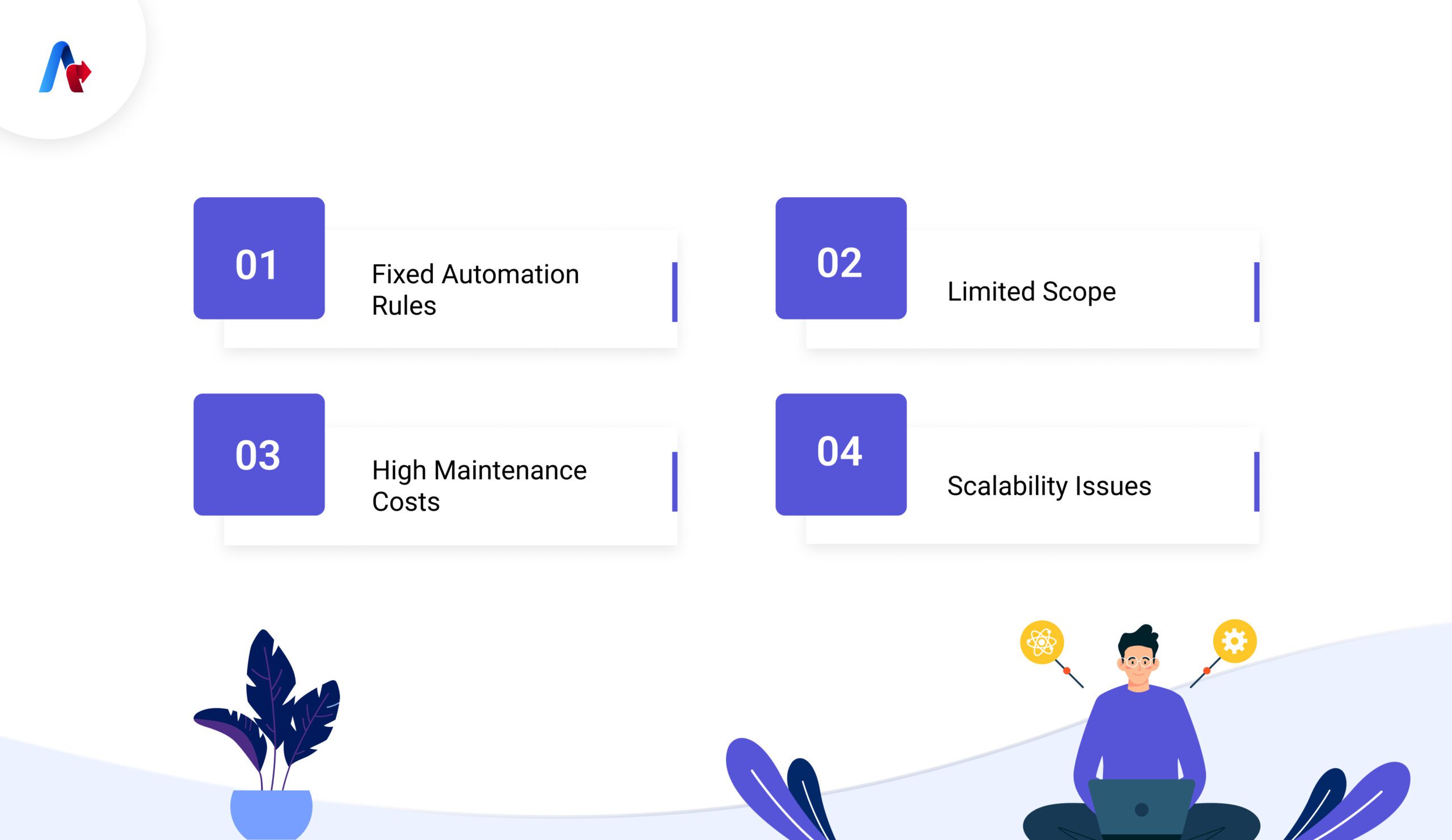
1. Fixed Automation Rules
Legacy bots depend heavily on scripts and static rules. A small change in application UI or workflow logic often breaks the automation, creating ongoing maintenance cycles.
2. Limited Scope
Traditional bots work well with structured, rule-driven processes. But real-world business involves unstructured inputs like emails, scanned documents, images, or even voice data—areas where legacy RPA struggles.
3. High Maintenance Costs
Broken bots = constant firefighting. IT and automation teams often spend more time fixing automations than expanding them. This adds hidden costs that reduce ROI.
4. Scalability Issues
Running hundreds of bots across business units introduces governance and orchestration challenges. Without advanced management tools, complexity grows faster than value.
Key Advantages of UiPath AI Agents Over Legacy Bots
Migrating to UiPath is not just about swapping platforms, it’s about gaining a new automation model powered by agentic AI. UiPath has progressed beyond traditional RPA by integrating AI Agents that combine automation with thinking skills. Together, these features make automation smarter, more connected, and easier to use.
1. Smarter Processing
AI models can handle unstructured inputs, recognize intent, and apply reasoning. This means bots can now process invoices with handwriting, extract insights from emails, or understand conversational text.
2. Broader Integrations
UiPath natively integrates with ERP, CRM, cloud platforms, and productivity suites, creating end-to-end workflows instead of isolated task automations.
3. Ready-Made AI Solutions
Features like Document Understanding, Communications Mining, and pre-trained machine learning models accelerate adoption by addressing common business use cases.
4. Human-in-the-Loop Collaboration
Unlike legacy bots that operate in silos, UiPath’s AI Agents can pause, request validation, or escalate to humans, ensuring accuracy and compliance without sacrificing automation speed
Let Accelirate guide your migration from legacy RPA to UiPath + AI Agents.
Contact our UiPath expertsHow to Migrate from Legacy RPA to UiPath AI Agents: Step-by-Step
Moving from legacy RPA to UiPath + AI Agents is both a technical migration and a strategic redesign of how automation is done. Here’s a roadmap to expect:
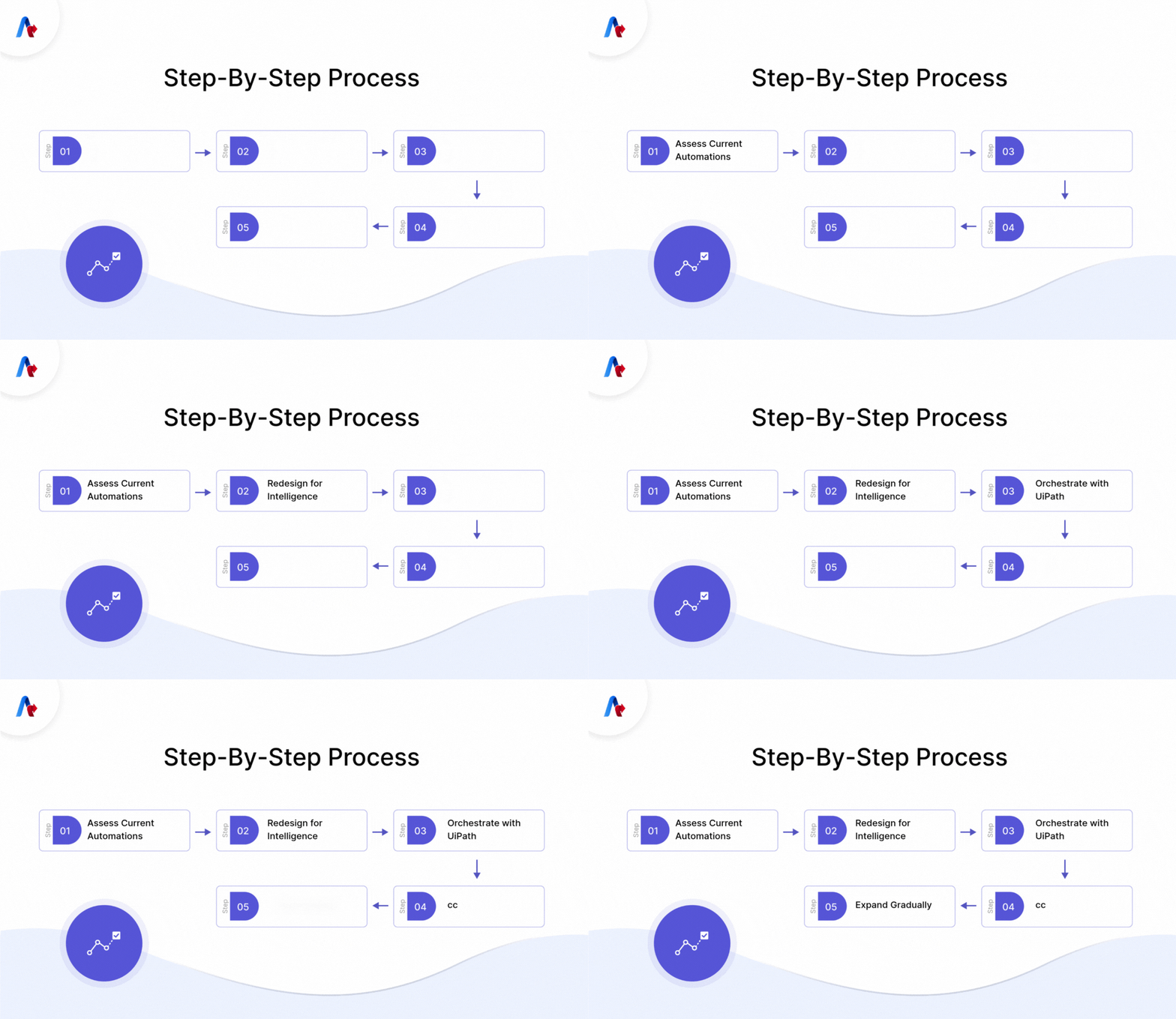
Step 1: Assess Current Automations
Review existing bots and categorize them:
- Migrate as-is if they’re stable and structured.
- Redesign with AI if they handle unstructured or complex data.
- Retire if they add little value.
Step 2: Redesign for Intelligence
Instead of just replicating old rule-based bots, leverage agentic test automation principles. Introduce AI-driven capabilities such as natural language processing, predictive decision-making, and contextual analysis.
Step 3: Orchestrate with UiPath
Use UiPath Orchestrator to centrally manage, monitor, and optimize bots across departments. Unlike legacy platforms, UiPath provides enterprise-grade governance for scaling.
Step 4: Start with High-Impact Use Cases
Pick areas where AI adds visible value, such as:
- Invoice processing
- Customer service queries
- Compliance validations
These early wins build confidence and support further scaling.
Step 5: Expand Gradually
Once initial use cases show results, expand to cross-departmental workflows, predictive maintenance, and autonomous testing services powered by AI.
What Business Outcomes to Expect with UiPath AI Agents?
Organizations migrating to UiPath + AI Agents can expect clear, measurable outcomes:
- Wider Coverage – Automations can now handle semi-structured and unstructured processes (emails, PDFs, images).
- Fewer Errors – AI Agents interpret complex inputs more accurately than static bots.
- Faster Time-to-Value – Pre-trained AI models reduce development time.
- Adaptability – Self-healing and context-aware workflows keep automations running when applications change.
- Balanced Workforce with AI – Human employees collaborate with AI Agents through human-in-the-loop frameworks, creating a digital + human hybrid workforce.
According to IDC, organizations using AI-driven automation achieve 30–50% faster automation cycle times compared to traditional RPA.
Challenges and Considerations of Migrating Legacy RPA to UiPath
As with any transformation, migration comes with challenges migrating Legacy RPA to UiPath+ AI Agents also has its own challenges and considerations:
1. Change Management
Employees must adapt to new roles where QA testing agents and AI co-workers become part of daily work.
2. Skill Development
Legacy RPA developers need to upskill in AI model integration, prompt engineering, and intelligent orchestration.
3. Data Readiness
AI requires high-quality data. Companies must ensure data pipelines are clean, compliant, and policy-driven.
4. Governance and Administration
Strong governance ensures automation remains secure, auditable, and scalable across multiple business units.
See how UiPath AI Agents transform automation in action.
Book a live demo with our expertsBest Practices for a Successful UiPath AI Migration
Enterprises that succeed with migration often follow these proven practices to maximize success and ROI:
1. Start Small, Scale Big
Pilot one high-value use case. Show results. Expand gradually.
2. Engage Stakeholders Early
Involve IT, business users, and compliance teams from the beginning to avoid friction.
3. Design for Change
Build automations with adaptability in mind. Assume processes will evolve.
4. Invest in Skills
Upskill developers and testers in agentic AI software testing and human-AI collaboration.
5. Measure and Iterate
Track KPIs such as automation uptime, error reduction, and ROI. Use feedback loops to refine processes.
The Future of Automation with Accelirate Powered UiPath AI Agents
Moving from legacy RPA to UiPath with AI Agents is not just a technical upgrade, it is a bigger, strategic change. By using intelligent automation services, organizations can overcome the limits of the legacy bots, discover new opportunities, and create a digital workforce ready for the future. The journey requires some planning, proper management, and upskilling, but the benefits are worth it: wider automation coverage, fewer errors, faster results, and a workforce where humans and AI collaborate seamlessly.