



Quick Summary
In software QA, test case design techniques are an integral part, as they reduce defects and improve release quality. With structured techniques, focusing on real user scenarios, and avoiding common mistakes, an enterprise QA team can achieve better coverage with fewer tests. As releases are becoming faster and more complex, effective case creation can prevent production issues, optimize efforts, and improve software performance.
The problem with the QA team today is not the tool they use. Instead, they struggle with better test case design techniques. As a team member, you might have felt this many times before: the test runs, the reports look fine, and when you look at the final production, there is always a problem with the bugs.
The real success of a QA strategy is based on one thing: how well you design your test cases. QA teams are using AI in test automation, tools, and AI in writing tests, but if the test design is weak, you will end up with problems at the end.
A Gartner report says that 90% of enterprise software engineers will use AI code assistance by 2028. This means that the challenges are increasing every day. Software development speed is increasing, and in this case, without a strong testing foundation, the risk will increase further.
With test case design in software testing, a team can not only write steps but also consider real-world scenarios, identify edge cases, and ensure everything is right when it goes to customers.
This blog explains test case planning in software testing and how it helps QA teams to mitigate production bugs. It covers important techniques, real examples, and step-by-step methods that help you write effective test cases. When a team uses these techniques to design test cases, they can improve coverage, identify edge cases, and avoid unnecessary tests.
What Is Test Case Design?
Test case design is a process that includes all actions, such as the test strategy, scope, environment, user scenarios and potential failures. The planning also comprises several processes, including expected results for validation and the coverage of positive and negative cases. This ensures that all functions work as intended under different conditions.
Through this design method, the QA team can improve test coverage, reduce issues and ensure every issue is identified before development. Typical test case design techniques include:
- Complete description of the test scenarios
- Unique test case ID generated by the system
- Conditions that should be met before execution
- Necessities that must be met before execution
- Complete actions with input data and expected results
- Actual results recorded during execution
- A final pass or fail status
What Are Test Design Techniques?
Test design techniques are used to create effective test cases with better coverage that avoid maximum duplication. By using these techniques, QA focuses on the most important scenarios, reducing effort and improving accuracy rather than randomly covering everything.
With proper methods, organizations can systematically identify valid inputs, edge cases, and risk areas. Here, they answer one key question: how do we design test cases that catch the maximum number of defects with the minimum number of tests? By using these techniques, you can ensure agentic automation testing is efficient and scalable, especially in complex applications.
What are the common goals of test design techniques?
- It will reduce the number of unnecessary test cases.
- Improve test coverage
- Identify edge cases and error scenarios.
- Make test cases easier to maintain and reuse
Not sure which techniques actually work for your application? Our team will help you choose the right approach to improve test effectiveness.
Schedule a free call with our QA experts.Why Test Case Design Techniques Are Important
Test case generation techniques can help a QA team to cover the right scenarios, reduce unnecessary tests, and catch more defects early. With them, you can make your testing more effective and avoid critical issues.
Improves Efficiency and Saves Time
A proper approach is already set here, so the team can avoid duplicates and unnecessary test cases. Test case design techniques help eliminate this by making testing more focused. It means that a can improve speed, reduce effort, and use the resources better than before.
Better Coverage
Testing everything blindly takes lots of time for the software team, but this method helps teams to cover more scenarios without increasing the number of test cases. A better case focuses on the most important inputs, conditions, and edge cases, ensuring critical functionalities get tested without wasting time.
Reduces Gaps and Bugs
One of the most common issues in testing is missing important scenarios. Understand that if test cases are not designed properly, defects appear in the final production even after repeated testing cycles.
When you use techniques to design test cases, they help identify the hidden cases and make your testing more reliable. Using structured techniques helps identify hidden cases, making your testing complete and more reliable.
Easy to Maintain Test Cases
Well-designed test cases are easier to use in the future when requirements change. Instead of rewriting everything from the beginning, it is a quick fix here, where you can adjust the existing one. This is very important in this agile software development world.
Scalable and Consistent Testing
Testing becomes more complex when the application grows. Test case design techniques that an enterprise uses can provide a consistent approach that the team can follow, making it easier to scale without compromising quality.
Essential read: AI in Test Automation: Everything You Need to Know
Common Types of Test Case Design Techniques

In test case creation techniques, there are three main types: specification-based, structure-based, and experience-based. Each type has its own approach to identifying test scenarios and improving test case coverage in software testing.
Static Testing Technique
This is a method that focuses on finding issues before software execution. This testing function includes reviewing requirements, documents, and code to detect issues in advance. Common methods here include reviews, walkthroughs, and inspections.
Main Advantages of Static Testing
- It reduces rework,
- Help to save costs.
- Improves overall quality in the initial stage
Dynamic Techniques
With dynamic test case design techniques, you can run the application to see how it behaves. It is one of the most common methods used in real projects and is the key part of the test case QA process. These are the important tests that ensure the apps work from a user and business perspective. It includes:
- Black-Box Testing: It is where we focus on system behavior without looking at the internal code. The examples for this testing are equivalence partitioning, boundary value analysis, decision tables, state transition testing, and use case testing.
- White-Box Testing: This approach mainly checks how the code works internally. The examples include statement coverage, decision coverage, and path testing. With this method, organizations can ensure all parts of the code are tested.
Experience-Based Techniques
Experience-based system techniques mostly rely on testers' knowledge, experience and intuition. In this method, there are no strict rules; instead, testers use their understanding of the system to predict and detect the errors.
This may be useful for real-world issues, including negative test case examples where QA provides unexpected inputs and actions. A method like this will be mostly useful in an environment where documentation may be limited and quick testing is essential. If you have an experienced tester, they can quickly identify the weak points and improve overall testing efficiency.
Some of the examples include:
- Error guessing
- Exploratory testing
- Checklist-based testing.
Looking to integrate agentic AI in testing? Read: What is Agentic AI Software Testing: Everything That You Need to Know
Top Test Case Design Techniques (With Examples)
Test case design in software is a way to test smarter, not harder. These methods can avoid writing hundreds of test cases and help you focus on what matters, such as input, logic and real users' behavior. A team uses a combination of techniques to improve coverage and reduce effort.
The following techniques are widely used across black-box and experience-based testing to improve coverage and reduce defects.
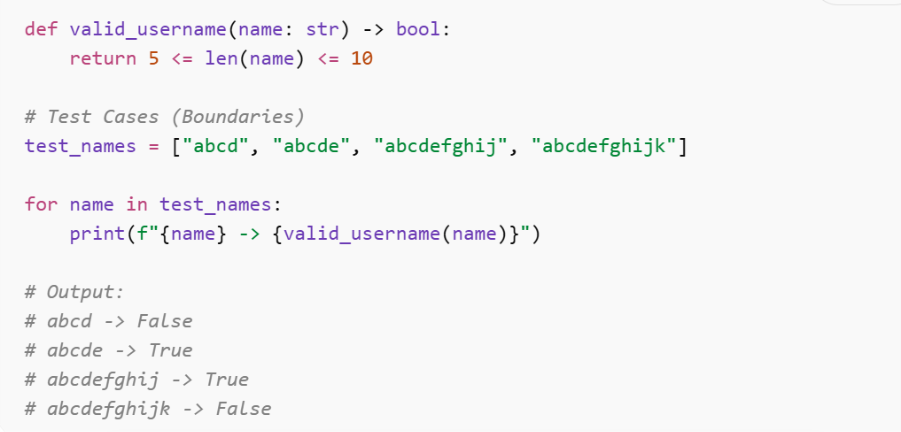
Limit Value Analysis
It is a method that focuses on testing values at the minimum, maximum, and just outside the limits. Even though many defects arise, this technique will help you catch critical issues early.
Example: If a username must be 5–10 characters, test cases include 4, 5, 10, and 11 characters.
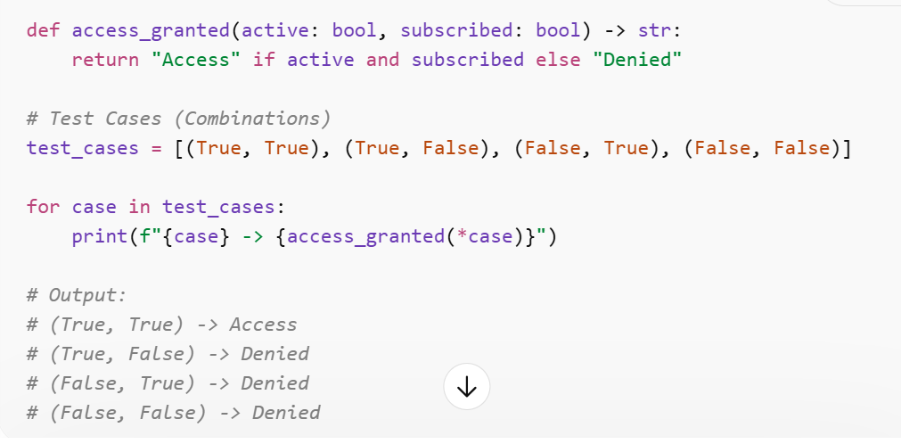
Decision Table or Rule-Based Testing
This type of testing is ideal when multiple conditions affect the outcome. Inputs and expected results are gathered in a table to ensure all the combinations are tested logically.
It is very useful for systems with complex business rules. Rule-based is widely used in API test case examples, where validating request inputs and responses is vital for ensuring system reliability.
Example: Access is granted only if the user is active and has a subscription.
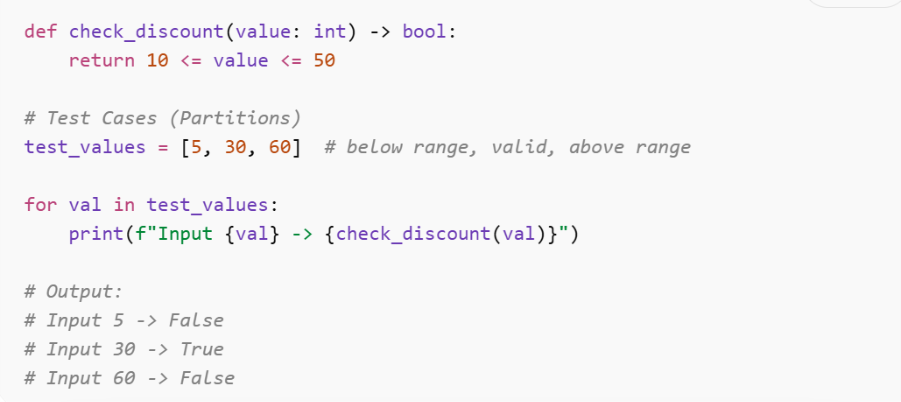
Equivalence Classes Method
Through this technique, you can divide input data into groups where the system behaves similarly. Instead of testing every value, pick one value from each group to reduce the number of test cases and maintain meaningful coverage.
Test case design example: If a discount field accepts values between 10–50, test cases may include 5 (invalid), 30 (valid), and 60 (invalid).
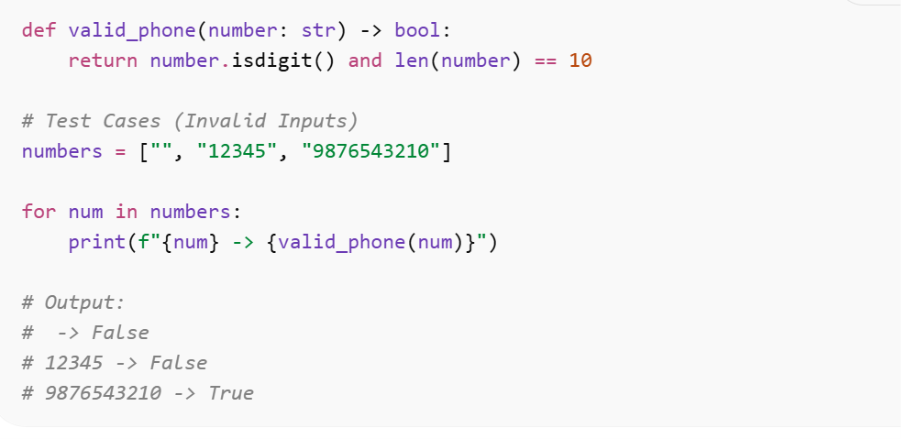
Error or Experience-Based Testing
It completely relies on the tester's experience and intuition. Instead of just following strict rules, testers predict where bugs can occur. Finding unexpected issues with this method is common, as structured techniques may miss. This is mostly combined with other methods.
Example: Validate a phone number input.
State Transition Testing
It is used for systems that change state, such as login flows and order processes. When you use this transition testing, it verifies that transitions between states occur correctly and that the system handles invalid actions.
Example: A user account locks after 2 failed attempts.

Interesting read: AI Testing Agents Explained: Automating QA for Maximum Efficiency
Want to apply these techniques in your real projects? Let’s connect to improve coverage, reduce effort, and speed up releases.
Schedule a free call today.How to Write Test Cases Step-by-Step
A good test case should explain what to test, how to test, and the result expected. For that, you need a proper approach that ensures clarity, coverage, and repeatability. The test case design techniques you write must avoid confusion, reduce rework, and improve overall software quality.
Step 1: Define Test Case ID and Title
The first and foremost step is to start giving each test case a unique ID and a clear title. This function avoids confusion, helps you track, manage and refer to later. This makes it easy to track, manage, and refer to later.
Example: TC_LOGIN_01 – Valid Login
Step 2: Identify the Test Scenario
It is vital to describe what you are testing. This will help testers understand the test case's purpose without confusion. A step like this also answers what a test case is in software testing and gives you a complete understanding of the test.
Example: Verify login with valid credentials
Step 3: Add Preconditions
Mention what type of setup is required before executing the test. An approach like this ensures the test runs in the correct environment.
Example:
- User account must exist.
- The application should be running.
Step 4: Write Clear Test Steps
The next one is to provide step-by-step instructions so anyone can execute the test without extra help. Always ensure that the instructions are simple and logical to avoid dependency.
Example Steps:
- Open the login page
- Enter username
- Enter password
- Click login
Step 5: Mention What You Expect
Clearly state what should happen after completing the steps. A step like this will clearly give a picture of actual vs expected outcomes. This is critical for identifying failures and ensuring correct validation.
Step 6: Record Actual Results
During execution, record what happens to help with debugging and reporting issues.
Example Recording: Login failed with error message
Step 7: Mark Test Status
The final step is to mark whether the test is passed or failed based on the comparison. It can track the testing progress and quality.
Example Status: Pass or Fail
How to Choose the Right Test Design Technique (Comparison)

The right test design takes into account factors such as project complexity, domain, team skills, and available time. It can also be based on the QA team's situation to improve test case design techniques, coverage and efficiency in software testing. Always balance accuracy, effort and risk while selecting the method.
- Understand Requirement Complexity: Understanding the complexity is the first step before choosing a method. If your system has multiple conditions and complex logic, it's better to use structured techniques. Methods such as decision tables and state-based testing ensure that all combinations are covered and reduce the risk of missing critical scenarios.
- Consider the Application Domain: Different industries have different testing requirements. For example, finance requires high accuracy, and security is the most important part here. In such cases, your team can use boundary testing and input grouping for precise validation.
- Align with Testing Stage: The testing stage also matters when choosing a technique. If you are in the early stages, it is good to use review-based approaches to catch issues before coding. Instead, if you are at a later stage, use execution-based techniques to verify system behavior.
- Evaluate Team Skills: Every team is different. One may have technical skills, but others may not. A team that has coding knowledge can use logic-based techniques. If not, choose behavior-based testing.
- Check Time and Budget: Sometimes, you will have limited time and resources. At that time, you need smarter testing. There are methods that reduce the number of test cases but still maintain coverage. Such methods help teams deliver quality without increasing effort.
- Use a Combination Approach: Using a single method is not enough. The best approach is to combine multiple techniques to achieve better results. For example, using input grouping with exploratory testing can improve both coverage and flexibility.
Challenges and Best Practices in Test Design
Test case design techniques are not just about writing scenarios. Instead, it ensures everything works in real situations. Many teams struggle with coverage, clarity, and maintenance, so following the best practices can improve quality, reduce burden and save time in designing test cases.
Challenges in Test Design
A team faces many challenges in test case writing, including time constraints, complexity, unclear requirements, and frequently changing requirements.
- Lack of Clear Requirements: When requirements are incomplete, it poses a big challenge for testers as they may create incorrect test cases. If it happens, it will create coverage gaps and miss defects.
- Time Issues: A lot of teams struggle with time in this fast world. Writing too many cases can waste the team's time. It is important to prioritize the task and allocate the resources for better utilization.
- Difficulty in Covering Edge Cases: Testers may miss boundary conditions and unusual inputs. And if it happens, there is a chance of bugs, which will affect the software's quality.
- Frequent Changes in Requirements: Requirements are changing frequently, and updating test cases is the most time-consuming task for the QA team to manage today.
A PwC report explains that traditional testing approaches lead to more defect-fixing costs and reduced accuracy and coverage. This explanation highlights that we need a better test case generation that fits this world and its challenges.
Read a case study: How Accelirate's Agentic AI-Led COE Saves Over 40K Hrs and 65% Costs in Testing for a Global Bank.
Best Practices in Test Design
The best way to improve test design is to focus on clarity, coverage, and real-world scenarios with the right techniques.
- Write Clear and Simple Test Cases: Keep the test steps easy to understand for all. For that, you need to make it simple and clear. What makes a good test case is its clarity of the steps, mentioning expected results and proper input.
- Use Techniques: Apply techniques like equivalence partitioning and boundary value. They can reduce your team's effort and improve coverage in techniques to design test cases.
- Focus on Real User Scenarios: Always ensure your test case design techniques are based on real-life scenarios. This improves relevance and effectiveness.
- Include Negative Test Cases: What is a negative test case? It is a method to check how the system behaves with incorrect inputs. So, it is important to test invalid inputs and unexpected behavior to catch hidden issues early.
- Keep Maintainable Test Cases: Organize your test cases in a systematic way so they can be easily updated when requirements change.
Start Building Smarter Test Cases for Better Quality Outcomes
Test case design is a QA activity that directly impacts the reliability of your product in real-world use. When you apply it effectively, you can reduce defects, improve coverage, and build confidence in your software releases. There are many testing approaches, such as boundary testing and exploratory testing, that can strengthen your testing strategy.
According to Gartner, 40% of enterprise applications will integrate AI agents by 2026. It means the system becomes more complex, and the organization needs strong testing and validation practices to ensure quality.
Most believe that having tools and automation by their side can solve the problem. No, it doesn't. The real value comes from how well you design your test cases, maintain and align with user behavior.
If you want to stay ahead in this fast-changing development world, improve your test case design techniques in software testing today with a partner like Accelirate. A better design with an experienced partner can mitigate production issues, increase your release speed and improve customers' trust.
If you’re ready to improve your testing outcomes, partner with us and accelerate releases with a structured, result-driven QA approach.
Get startedFAQs
A test case comprises different steps, inputs, and expected results that help QA to verify whether a specific feature works correctly in an application. This is a great help for your testers as they can check system behavior under different conditions, including both valid and invalid scenarios.
If you want to make good test cases, make them clear, simple, and focus on one objective. More than that, it should also explain different steps, expected results, valid test data and be easy for anyone to understand and execute.
Always ensure the test cases focus on clarity, coverage, and the real user behavior. Use simple steps, mention the results you are expecting, and avoid unnecessary complexity while designing. An approach like this can improve the quality of test case QA and provide better results.
The common mistakes we usually find are writing unclear steps, missing edge cases and boundary values, creating many test cases that waste time and ignoring negative test case examples. Avoiding these mistakes can affect the quality of your software.
Let's look at a simple QA test case example, but in the real test cases, you can see more details, such as test data, prerequisites, and results.
Test Case ID: TC_01
Scenario: Verify email input
Steps: Enter a valid email → Submit
Expected Result: Email is accepted