



FEB 12, 2026 |
What Is Automated Regression Testing and Why It’s So Important in 2026?

Quick Summary
The year 2026 is bringing more competition in software and development. So, a team cannot just concentrate on regression tests alone since they affect the applications' release and updates. Automated regression testing is the solution for it, as it protects the existing functions and avoids errors. The automation speed and risk-based prioritization of agentic AI testing mitigate problems early and improve delivery without affecting stability, quality, and customer trust.
A team expects many things from a software update or release, yet a small change can quietly break down what already works well. That’s a reality most enterprises live with. As software releases move to the next stage, complexity increases, and leadership demands a shorter release cycle.
And there is a need for a system that improves speed with quality. Manual testing is not practical here, so automated regression testing is the only option to meet requirements. Still, many organizations face issues with AI testing large test cases, scripts breaking, and maintenance costs.
It is not the problem with the regression test suite, but the way you handle it. When you build around key workflows and business risks with an experienced provider, you'll get better results and greater confidence. This method not only improves speed but also stabilizes everything during software updates.
Gartner research emphasizes that modern testing strategies should move toward risk-based and impact-aware approaches. A method like this can reduce unnecessary test execution and accelerate meaningful outcomes and feedback
What Is Automated Regression Testing?
Regression Testing automation rechecks the tool's existing functionality and ensures it doesn't break during upgrades. The purpose is simple: make sure new updates don’t break what already works. In this fast DevOps environment, code changes frequently as software teams add features and fix bugs.
The old way of fixing them takes time, money and effort, but with self-healing automation testing, the AI agents find UI changes and fix them automatically without any manual intervention. With regression automation, a modern QA gets peace of mind and spends less time fixing the issues. This method improves delivery and change management, ensuring nothing affects updates and fixes.
Types of Regression Testing
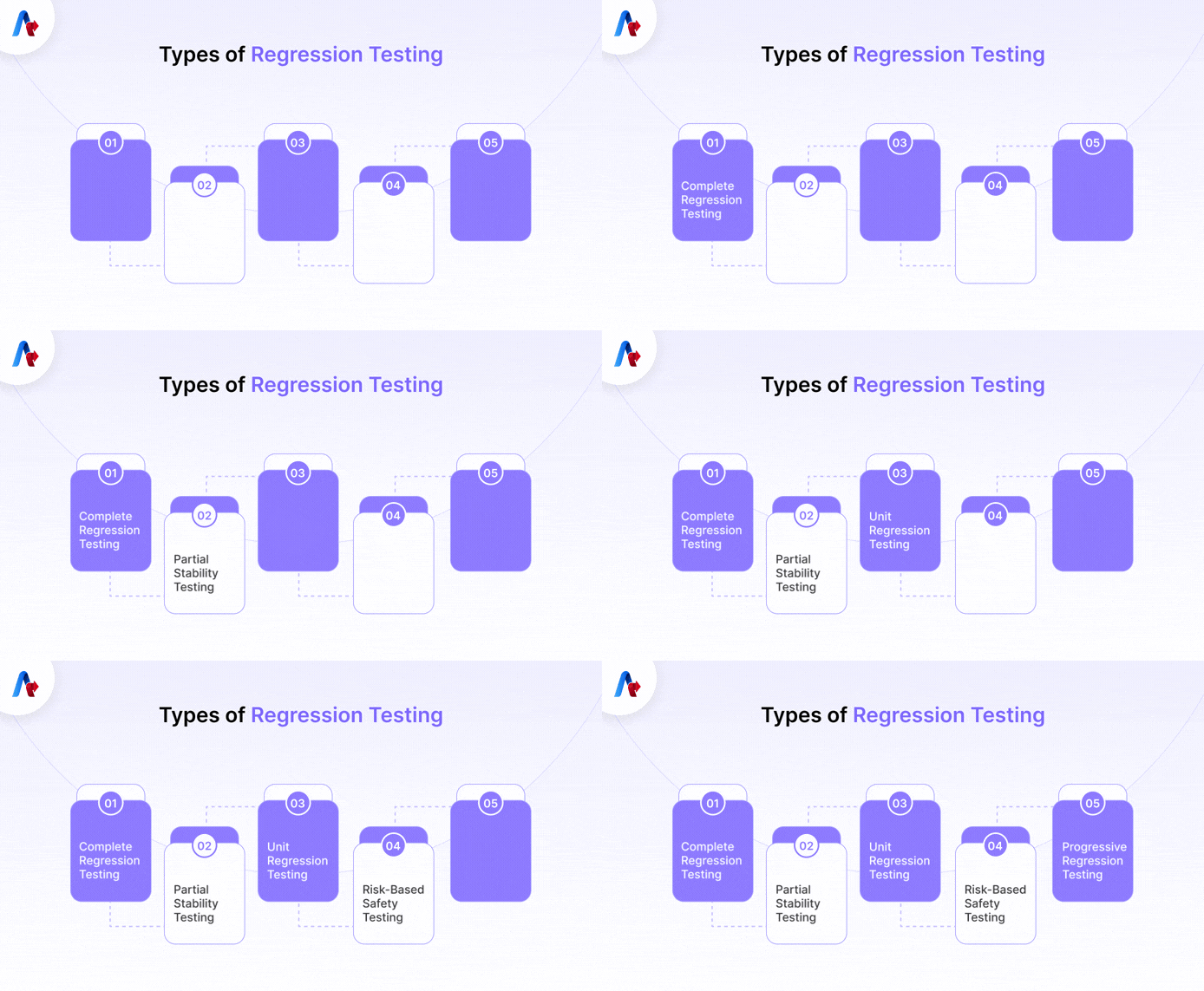
QA can choose the preferred type of check based on the project and situation. The types below will give you an idea of what to test once an update occurs.
-
Complete Regression Testing:
A team chooses this type of check to ensure nothing breaks. Since this test covers the entire application, it will take longer to finish.
-
Partial Stability Testing:
Unlike the above, this focuses on the specific side you updated, not the entire application.
-
Unit Regression Testing:
In this method, the AI will focus on the individual part affected by the change or update.
-
Risk-Based Safety Testing:
It will target the most affected areas where the risk is visible and avoid issues in advance.
-
Progressive Regression Testing:
Here, it tests new features and existing functions to ensure new code or changes do not affect functionality.
Read: What Is AI-Powered QA Automation and How Is It Changing Software Testing?
How Is AI-Powered Regression Testing Different from Other Automated Testing?
The old way of evaluation is based on speed alone, but a smart AI can make smarter decisions. Instead of treating every test as the same, AI focuses on risk, impact, and learning from past results. Let’s see the comparison chart below for more details.
| Aspect | Traditional Automation | AI Software Regression Testing |
|---|---|---|
| Test selection approach | Runs the full regression | Selects based on risk and change impact |
| Maintenance effort | High manual effort | Uses auto healing to fix locators |
| Execution efficiency | Long execution cycles | Faster with optimized test selection |
| Failure analysis | Manual investigation | AI finds the root cause and failure patterns |
| Scalability | Hard to scale | Scales easily across apps and APIs. |
| Business visibility | Limited insight into risk | Clear coverage for critical business flows |
Still running full regression test suites? See how AI checking can prioritize what truly matters.
Explore our AI-led regression approachWhen Does Regression Validation Happen?
You can test an application in different situations. Some of the ideal situations are:
-
Before Software Release:
As enterprises look for scaling, there is always a need to release new apps as part of the plan. At this time, checking will help avoid any last-minute surprises on the tool performance and other areas.
-
Code Change:
The modification is part of the software. Fixing bugs, adding new features, and optimizing code can make things different. In such situations, automated testing can ensure that nothing goes wrong.
-
Integration:
This is another area where we need this evaluation, as the different components are developed and integrated later. After this process, it will check everything that is functioning without any changes.
-
Old System:
Sometimes, periodically, you need to run this check to make sure the functions are working properly. These systems are continuously working with new software and ensuring it functions properly.
Read: What Is AI-Powered QA Automation and How Is It Changing Software Testing?
Core Capabilities of Modern Automated Regression Testing Services
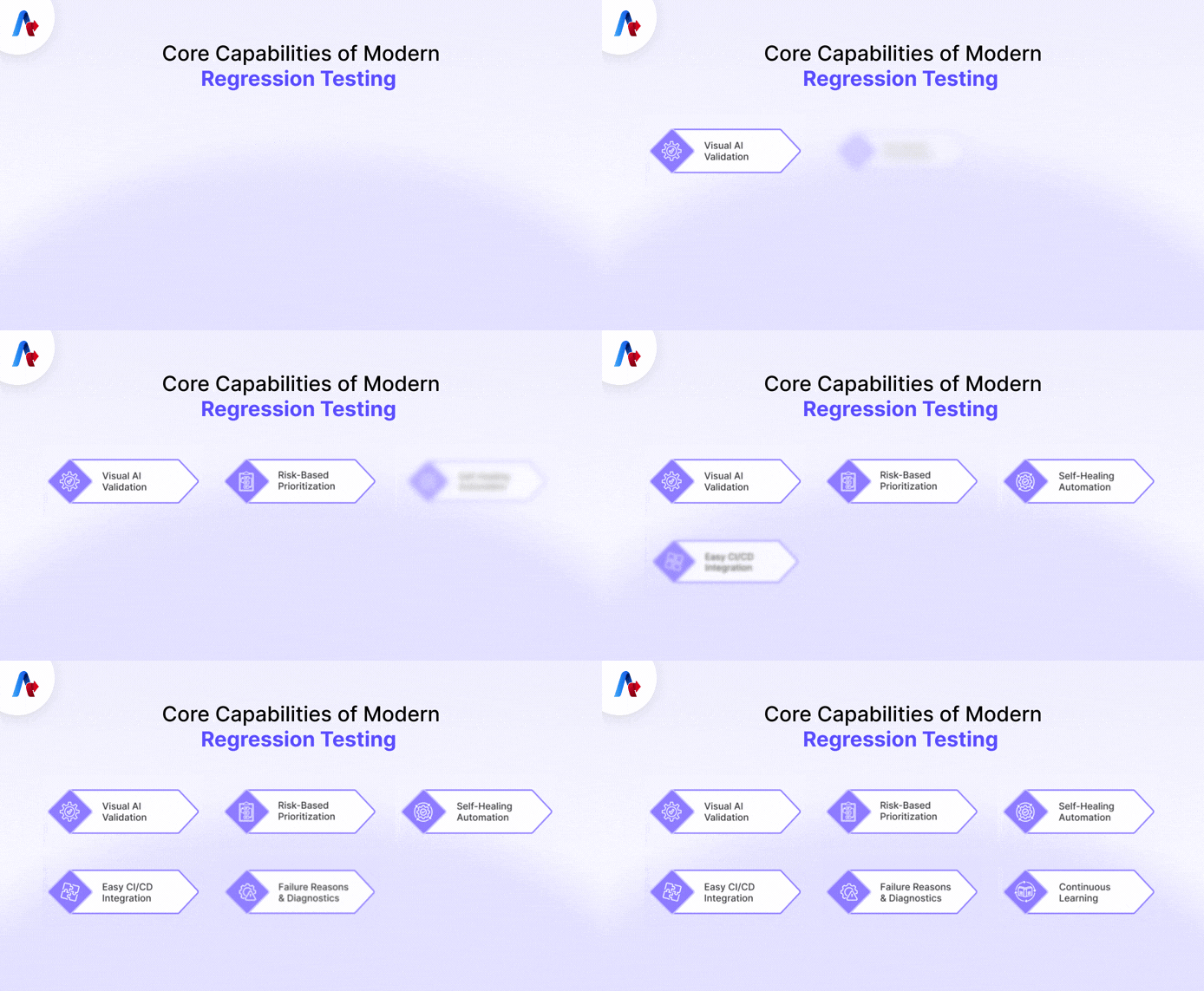
Modern applications are more complex than before, so they need more than basic automation. Today’s AI regression validation is the right fit, focusing on accuracy and speed rather than just running tests.
-
Visual AI validation:
When something changes, the AI does not just look at the code or the object. Instead, it validates visually, helping catch issues early that are often missed by other methods.
-
Risk-Based Prioritization:
A typical approach treats everything the same, but agentic automation testing is not like that. Its automation capability identifies where the risk is higher or where the impacts are higher.
-
Self-Healing Automation Locators:
With self-healing, the test will automatically identify and adapt to UI and locator changes. This method reduces script failures and lowers maintenance effort.
-
Easy CI/CD Integration:
The power of this type of testing does not just stay with risk reduction and healing. Instead, it also helps the QA team integrate it smoothly into CI/CD pipelines that support faster and safer releases.
-
Failure Reasons and Diagnostics:
A team not only gets what failed, but also the reasons and diagnostics. These insights will help you give more attention to where it is essential.
-
Continuous Learning:
AI in test automation learns from past problems and mistakes, making stability validation smarter in future releases.
Business Functions of AI Regression Testing
From a business perspective, automated regression testing best practices can play an important role when changes occur. For a fast-moving enterprise, protection like this is more than anything, as it affects their business.
There are a few areas where this is most critical. For example, take payment software or customer data. When you compromise them, you not only lose trust but also face the legal consequences.
Failing to comply with laws, such as GDPR, will result in thousands of dollars in fines and cause your organization to incur financial losses. Stability checking can avoid these issues and make sure your tools are safe to release.
Removing uncertainty is another advantage an enterprise gets here. Instead of guessing everything is safe, teams rely on clear regression results to avoid risks and emergency fixing. This testing prevents costly failures, catches issues, and maintains your brand's trust.
Forrester research claims organizations focusing on QA based on risk and intelligent automation consistently improve delivery quality and reduce the chance of failures across release cycles.
Essential Read: Why Pay 40% More for QA When Autonomous Testing Agents Deliver Faster?
When there is risk, guesswork isn’t an option. See how we can protect your most critical workflows before every release.
Talk to our team nowHow Accelirate Delivers Scalable and Value-Driven Automated Regression Testing
Partnering with Accelirate comes with several advantages because we don’t really build testing around maximum tests. Our approach starts with a question: what could hurt the business if it breaks?
The risk is what we focus on more. Instead of endlessly testing everything, our team will design regression tests around key user journeys, revenue paths, and system dependencies. This method of testing focuses on key areas and makes it more meaningful.
The approach is also focused on outcome-driven methods that enable enterprises to map clear business goals, such as release stability, reduced failures, and faster decision-making.
Accelirate’s testing models can also fit modern systems. This means that it will support cloud platforms, APIs, microservices, and AI-based applications. And most importantly, an organization can track performance continuously, so it can check ROI with more visibility.
Take Software Regression Testing as a Strategic Advantage with Us
In 2026, stability testing with automation is essential for taking your business to the next level. By testing how the update affects the existing function, an enterprise can move forward confidently and accelerate its release process with every release.
Speed without stability is risky because there is no assurance about customer impact and business risk. Automated regression testing best practices can avoid all these issues and move without assumptions, but with more evidence and clarity.
From Accelirate’s point of view, quality is not a blocker to speed, and we bring quality, agility, and stability together. When AI testing is based on business risk and outcomes, teams work smarter, decide faster, and protect what matters most. It means that stability checking becomes a true accelerator and a safety measure for your organization.