



MAR 16, 2026 |
Why Test Automation as a Product, Not a Project, Brings Faster ROI

Quick Summary
The traditional view of testing as a short-term benefit is not ideal in this AI-driven world. Today, application releases are faster, so companies need automation that evolves with the change. By considering test automation as a product, a team can focus on outcomes, such as faster regression cycles, reliable releases, and scalable automation frameworks. In this way, an organization can build a test automation strategy that not only supports today but also long-term success.
If you work with a software QA team, you understand what test automation is. It is a vital process, as companies are pushing more frequent updates to improve performance and meet users’ expectations across web, mobile, and cloud platforms.
For years, people didn’t consider test automation as a product but a project. It happened because they thought it was a short-term process. Soon, that consideration has shifted to a different perspective as applications become more complex and release cycles shorten.
The project mindset has its limitations because everything stops after test creation and doesn't evolve as apps grow. That’s why a new long-term product mindset has been adopted, with scaling, continued support, and stable delivery.
What Is Test Automation in Software?
AI automation testing uses software tools that automatically verify that an application is working as intended. This process early took lots of manual work where people had to check everything repeatedly to validate features, performance, and system behavior.
In modern development, automation tools play a vital role in continuous testing and quality engineering. With AI agents in testing apps, a team can validate everything quickly, catch bugs, and maintain quality without sacrificing stability.
Why Test Automation Is Moving from Project to Product
Earlier, QA teams approached testing in a different way. They picked a set of regression test cases, automated them, and celebrated execution speed. And the team thought the mission was complete. This process looks good on paper, but it only lived for a short time.
Why? Because software doesn’t stay still, it grows as business moves forward.
Today, applications are evolving faster than we thought. New features are coming at least weekly, and user journeys are now extended to web, mobile, APIs, and cloud services. A small change on one side can affect multiple parts of the system. So, this is why automation is not a one-time task but a continuous effort along with the products.
Now, this thought has led to a new concept: “test automation should be treated as a product rather than a project”. When any organization adopts these test automation services, it supports long-term quality engineering that helps improve the overall performance of the application.
Project-Based Automation vs Product-Based Automation
| Project Approach | Product Approach |
|---|---|
| Short-term automation effort | Long-term automation strategy |
| Focus on script count | Focus on business outcomes |
| Stops after test creation | Continuously evolves with the product |
| High maintenance cost | Scalable automation frameworks |
| Limited test coverage | Continuous testing and reliability |
Moving beyond project-based automation? Our expert team can help build scalable AI testing frameworks for modern software delivery.
Talk to our expertsWhy Test Automation as a Product Matters in Modern Software Delivery
In agile software development, teams expect to connect apps across all areas and expect everything to work as planned. It means that testing should not be slow, manual, or disconnected. Most of the teams are moving from this perspective because:
-
Demand for Faster Release Cycles:
Agile and DevOps practices shorten the release timeline. Now, there is a question about reliability, and that is answered with the test automation solutions. It quickly validates changes in the system and supports continuous software testing without delaying deployments.
-
More Focus on Outcomes:
Nowadays, many companies are focusing on direct outcomes rather than measuring success by successful adoption and script counts. It includes improving customer experience, product reliability, and confidence.
-
Increase the Adoption of AI-assisted Tools:
In this AI world, an AI-assisted testing tool helps teams identify gaps that would take weeks or months in traditional work. With automation, you can test coverage faster, generate scenarios, and reduce maintenance effort.
Explore our guide: AI in Test Automation: Everything You Need to Know.
Moving From Script Counts to Business Value Test Automation Framework
If you are a business focusing on project-based automation, it is the biggest mistake. It focuses on metrics such as the number of automated test cases covered. It doesn’t mean the script isn't counted, but it will not answer a real question leadership asks: Is automation improving product quality and delivery speed?
This is why a shift is necessary to product-based as it improves meaningful outcomes such as:
- Faster regression cycles
- Detects problems early
- Improve the QA team’s confidence.
- Reduce maintenance issues.
- Increase trust in automated results.
Building Test Automation That Works for Every Role in QA
When organizations start treating test automation as a product, it becomes a collective responsibility to the entire testing and development community. So, this shift becomes more practical and valuable for different roles across the enterprises.
For Quality Leaders
For this group, AI automation becomes a strategic quality capability that supports faster releases with more stability. Instead of viewing this as technical support, QA leaders see how it contributes to delivery performance and customer satisfaction.
For Test Managers
If you are a manager, this approach provides better visibility and governance. A well-designed automation framework offers standardized processes, reusable assets, and clear reporting, making it easier to manage as it scales.
For Automation Engineers
Autonomous testing with AI agents will assist engineers in maintaining stable solutions rather than continuously fixing scripts. The product-based framework stresses reusability, modularity, and long-term success.
For Manual Testers
AI agents testing also supports manual testers with their repetitive tasks. With this process, testers can focus on exploratory testing, usability validation, and other complex business scenarios where human insight adds greater value
The Growing Role of AI in Test Automation
Artificial intelligence is taking a greater role in the testing ecosystem. Many enterprises are exploring how AI test automation can improve their productivity and provide measurable ROI.
According to Gartner research, AI-augmented software testing tools with autonomous capabilities in application development are helping teams to deliver high-quality software faster than before. However, the value of intelligent automation becomes clearer when you treat it as a product.
Instead of using artificial intelligence (AI) as a separate tool, businesses are integrating its features into their automation capabilities. Some of the examples include:
- AI can automatically identify areas where test coverage may be missing.
- Some tools can help generate test scenarios from requirements.
- It helps teams to identify patterns, recurring failures and other root causes.
- Automation will identify changes during the updating and reduce maintenance with its healing power.
Read: AI Testing Agents Explained: Automating QA for Maximum Efficiency
How to Design Test Automation as a Product
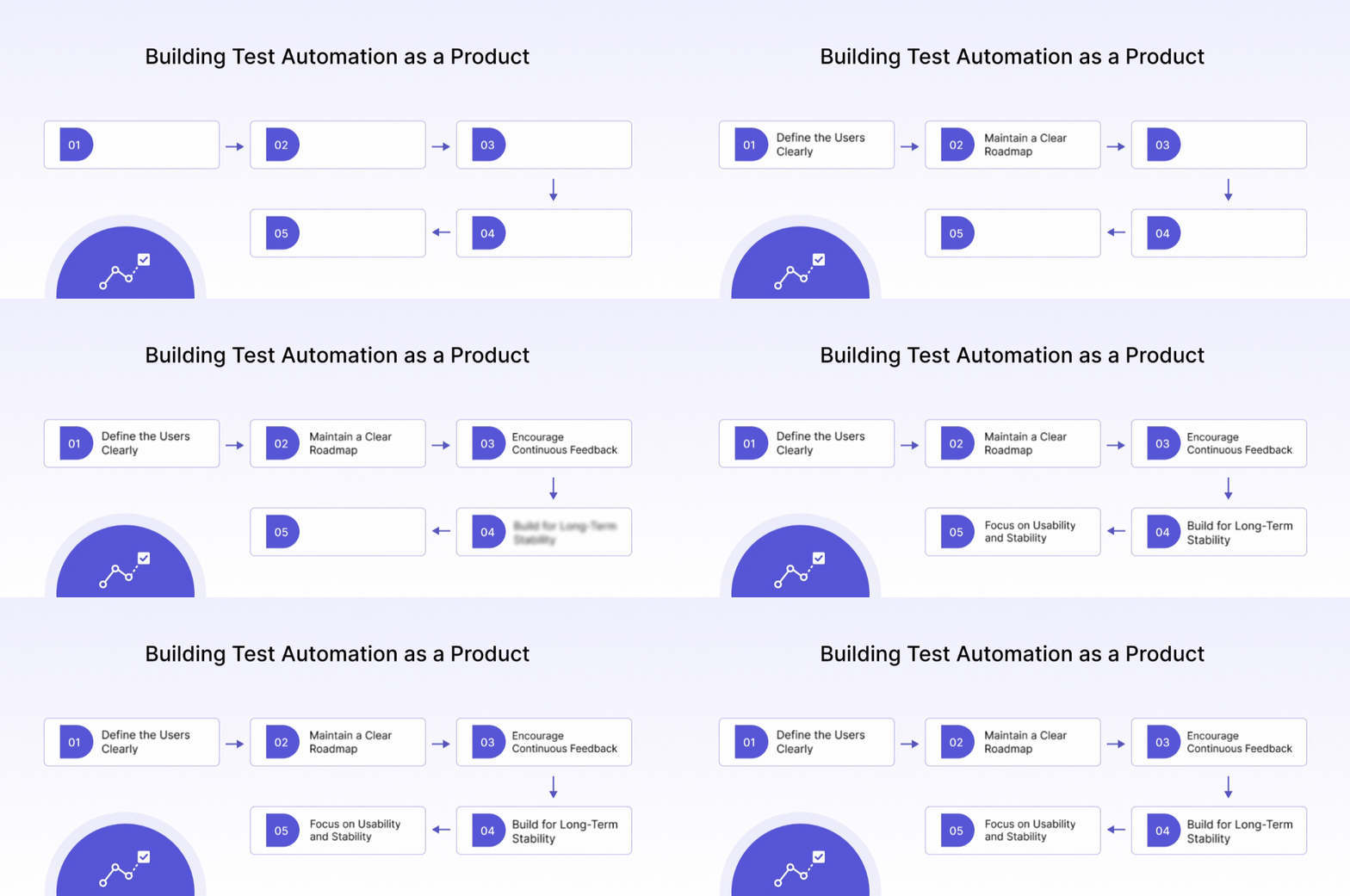
If you want to go for this method as an organization, build a systematic and disciplined method that helps you move towards successful automation. Let’s see a method that can help businesses create one of their own.
-
Define the Users Clearly
Every test automation platform has its internal core users, such as testers, developers, release managers, and quality leaders. A well-designed automation framework should make their work easier than before by providing simple execution processes and reporting methods.
-
Maintain a Clear Roadmap
Just like any product implementation, automation should also evolve over time. This process may include better reliability, stronger reporting capabilities, increased scalability, or support for new technologies and applications that come later.
-
Encourage Continuous Feedback
As a company, feedback options are necessary to improve usability, maintenance effort, and reporting clarity. Feedback options can help you improve the automation platform quality and ensure it meets real testing needs.
-
Focus on Usability and Stability
An AI testing platform must be easy to use for all its stakeholders. This should be possible without involving a technical team. Simplicity is the most important part of a tool to improve its usability.
-
Build for Long-Term Stability
Automation should run consistently when applications change. Stable testing reduces maintenance work and ensures teams can continuously test without any trouble.
Expertise in testing strategy is the most important part of automation. Accelirate has experience and trust in the market.
Let’s build a scalable automaton for your testingThe Business Value of Productized Automation Framework
When your company sees intelligent automation with a different mindset, you don’t see it as a technical activity or a cost of production. Instead, it becomes a product that directly supports business performance. A well-organized AI agent testing provides several outcomes, such as:
- Accelerate software release cycles.
- Reduce operational risk by identifying problems in advance.
- Continuously monitor product functions to improve product reliability.
- Increase developer productivity by eliminating repetitive tasks.
- Finally, it will improve the customer experience (CX).
EssentialShape Read: Why Pay 40% More for QA When Autonomous Testing Agents Deliver Faster?
The Future of Automated Testing
The future of software testing will be different because companies do not see how many tools they adopt. More than script numbers, they look for tools that evolve with their product and services. If you treat QA testing as one-time work, it will not help much and will affect your release cycle.
However, anyone treating test automation as a product continuously adapts, improves, and scales; the result will be different. Companies are now looking for software to drive success, so if you invest in automation as a product, it not only helps with script writing but also provides measurable ROI.
McKinsey research says that organizations that adopt AI-driven automation across engineering and operations can improve their productivity and accelerate innovation. That’s why choosing test automation brings speed and builds greater confidence in application releases.
Read: Agentic Testing: Optimizing Test Automation with AI Agents to Boost Productivity
Start Treating Test Automation as a Strategic Product with Accelirate
The way we approach testing matters now because, when the perspective changes, organizations will no longer consider it a cost center but a strategic advantage. More than that, software development with a product environment brings faster releases, helps with complex applications, and improves customer expectations.
When moving with a mindset of test automation as a product, a QA team will see it as more than just writing scripts. Then, it becomes a process that supports continuous software testing and strengthens overall quality engineering practices. And finally, it helps teams to reduce maintenance, detect issues earlier, and deliver consistent software.