




Quick Summary
Anypoint Code Builder is MuleSoft’s IDE for developing APIs, integrations and Mule apps in one environment based on VS Code. It allows cloud and desktop development, Git collaboration, testing, debugging and deployment. Developers may use AI capabilities such as MuleSoft Vibes and Einstein to produce API specifications, Mule flows and integration starting points from natural language prompts while maintaining review, testing and governance.
Flexibility and speed are no longer optional in enterprise integration. They are the baseline. As MuleSoft continues to evolve its platform, Anypoint Code Builder (ACB) has emerged as its next-generation IDE, purpose-built for how modern development teams actually work.
Officially introduced in 2022 and designed around a VS Code experience, Anypoint Code Builder brings API design, Mule application development, testing, and deployment into a single environment, cloud or desktop. For teams managing complex enterprise integrations at scale, that means less tool-switching, faster onboarding, and a development experience built for today's AI-assisted, DevOps-driven workflows.
At Accelirate, we work with Anypoint Code Builder across enterprise MuleSoft deliveries. In this blog, we cover what ACB is, how it compares to Anypoint Studio, its AI capabilities through MuleSoft Vibes and Einstein, and how teams can get the most out of it in practice.
What is MuleSoft Anypoint Code Builder?
Anypoint Code Builder (ACB) is MuleSoft’s next-generation integrated development environment (IDE). It allows developers to design, develop and deploy APIs and integrations. The MuleSoft Anypoint Code Builder is based on a similar VS code experience and provides an easy-to-use development environment for desktop and cloud. It is a comprehensive solution built within MuleSoft’s Anypoint Platform, simplifying the traditionally complex process of connecting applications, data, and devices. In this blog, we will explore how MuleSoft’s Code Builder innovation can help you build faster, more efficient and simplified integrations.
Introducing Einstein for Anypoint Code Builder
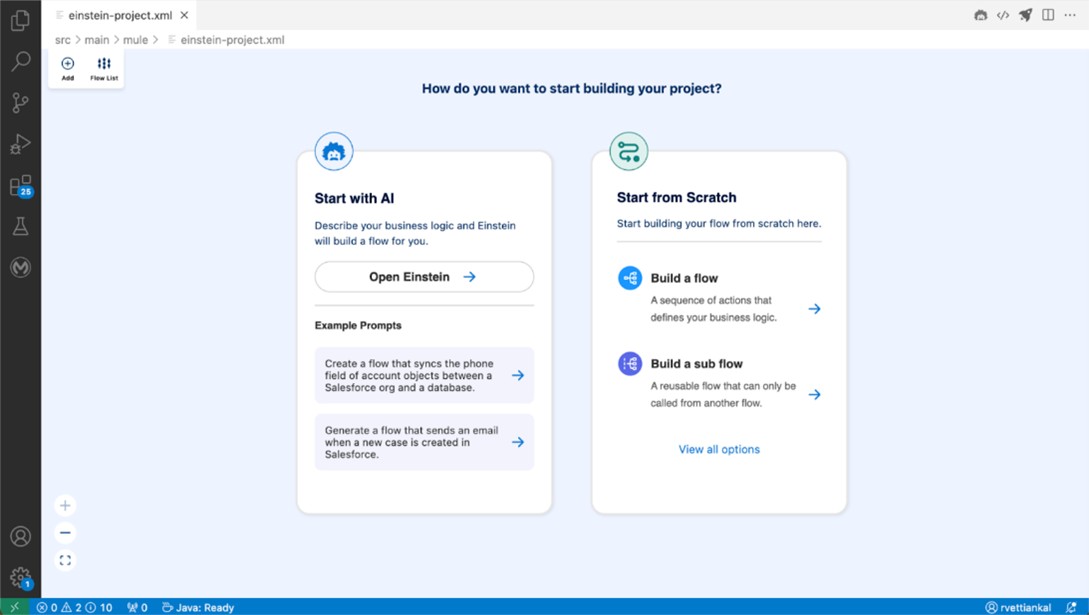
MuleSoft in August 2024 announced the general availability of Einstein for MuleSoft Anypoint Code Builder. With the aim of enhancing innovation in integration projects Einstein integrates AI capabilities directly into the development environment.
The Power of AI meets MuleSoft development
Einstein for Anypoint Code Builder will enable developers to initiate integration projects using natural language prompts, enabling them to jumpstart their integration projects seamlessly by simply describing the business logic.
Compatibility with the MuleSoft ecosystem
Designed specifically for MuleSoft, Einstein provides optimized AI-generated code compatible with over 175 MuleSoft connectors, ensuring that generated code aligns with MuleSoft’s standards and practices.
Security with Einstein Trust Layer
To maintain the accuracy and safety of AI outputs, and promote ethical AI practices, Einstein Trust Layer is a comprehensive security framework designed to protect your data and ensure its privacy and security of your data.
Learn How Mulesoft’s Innovations Can Work for You
Contact Us for a Consultation
Purpose of MuleSoft's Code Builder
The challenges faced by small and medium-sized businesses encompass limited financial resources and a shortage of in-house technical expertise. Constrained budgets hinder the allocation of substantial funds for advanced data tools, necessitating the identification of cost-effective solutions.
MuleSoft's Code Builder is a collaborative, cloud-based development environment tailored for MuleSoft's Anypoint Platform. The primary purpose of Code Builder is to simplify and accelerate the process of building Mule applications, fostering collaboration among development teams. It offers an intuitive interface and a suite of features aimed at improving efficiency and reducing the development lifecycle for MuleSoft integrations.
Key Features of Anypoint Code Builder
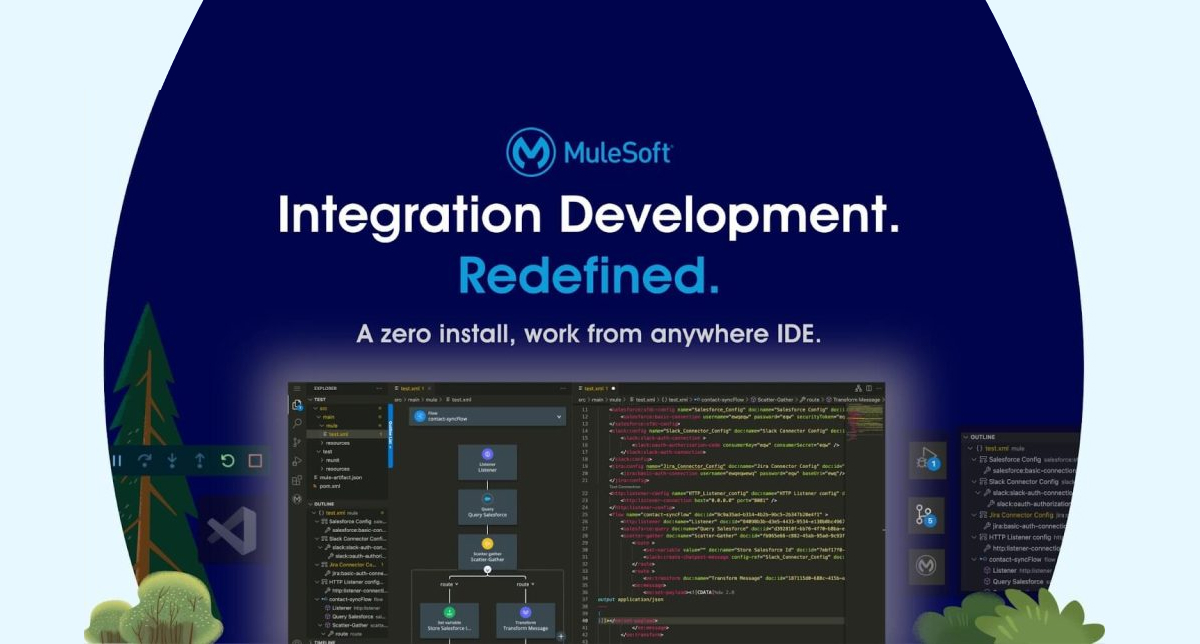
By providing a single, unified environment for building, testing, and debugging APIs and integrations, Anypoint Code Builder helps MuleSoft developers streamline their development process. Here’s how:
01 - Unified Environment
By providing a single, unified environment for building, testing, and debugging APIs and integrations, MuleSoft Anypoint studio Code Builder eliminates the need to switch between multiple tools and platforms. This reduces context-switching and increases developer productivity.
02 - Improved Collaboration
Anypoint Code Builder's integration with version control systems enables developers to collaborate more effectively with their team, ensuring that everyone is working with the most up-to-date code.
03 - Faster Development
Intelligent code assistance and debugging capabilities help developers write, test, and debug their code faster and more accurately, resulting in shorter development cycles and quicker time-to-market for APIs and integrations.
04 - Better Quality
Finally, integrated testing with MUnit ensures that developers are building reliable and robust code, reducing the risk of issues in production.
Prerequisites
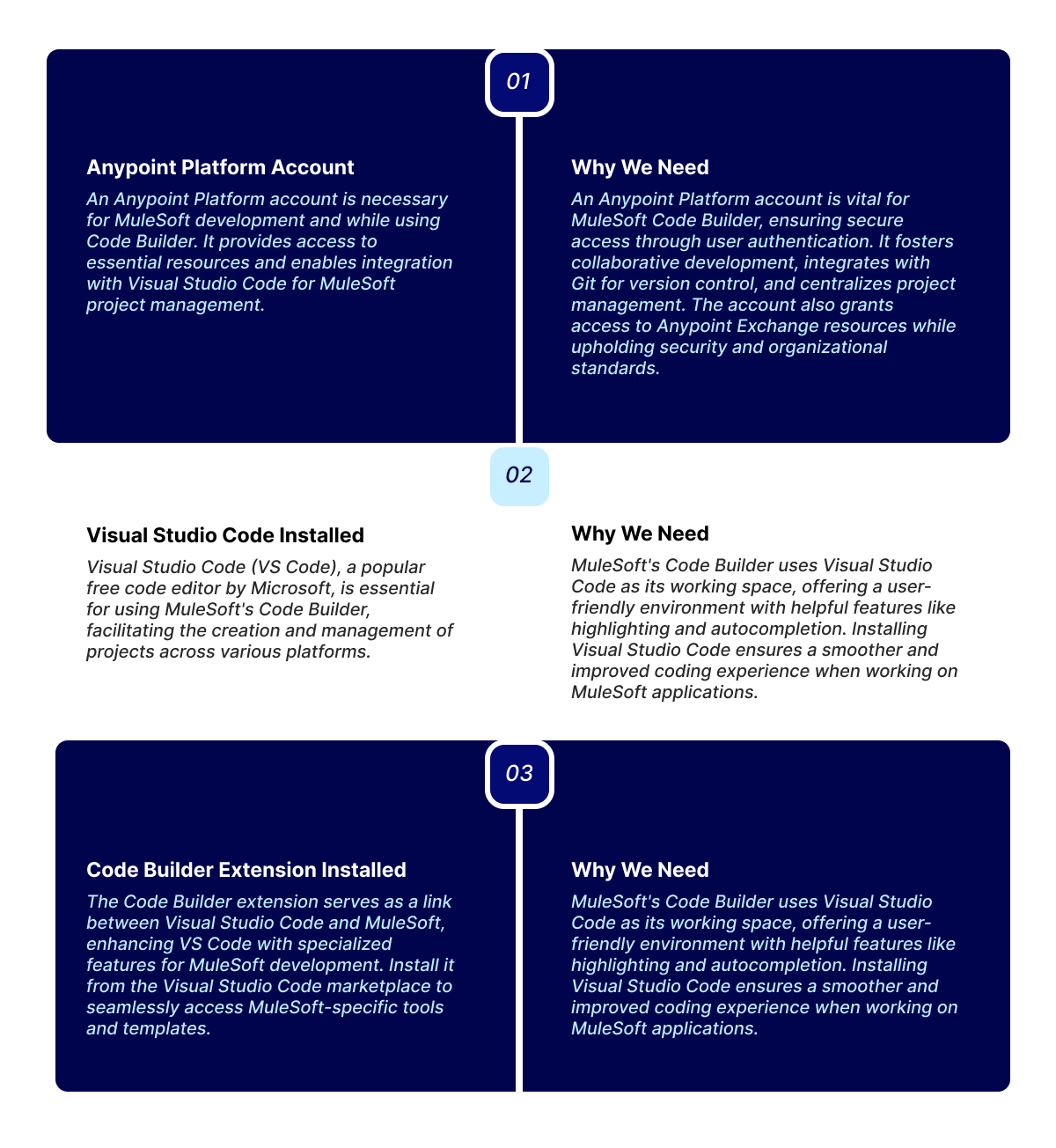
Ready to get started with your coding adventure? Let's ensure you have the prerequisites for using Code Builder in place for a seamless coding experience.
How to Implement APIs using Anypoint Code Builder
Before diving into the steps API implementation let’s first explore top five methods methods for implementing APIs using Anypoint Code Builder:
- API Specification: Design API specifications using RAML or Open API to define endpoints and operations. Based on these specifications, code builders provide tools to validate and scaffold.
- Flow Designer: You can use the low code, drag-and-drop interface to create quick APIs. Here pre-built connectors orchestrate data integrations and transformations.
- Mule Applications: To have advanced control over your data flows, logic and customization you can implement APIs using Mule applications in Java or XML.
- API Kit: Want to let the dev focus on business logic? Generate flows directly from RAML/OAS specs with automated setup and routing.
- Testing and Debugging: Debug, test and monitor APIs using built-in tools for smooth performance and functionality before developing.
Now let’s have a look into how to implement APIs using MuleSoft anypoint code builder:
Prerequisites:
Create test account on Anypoint platform.
Step 1:
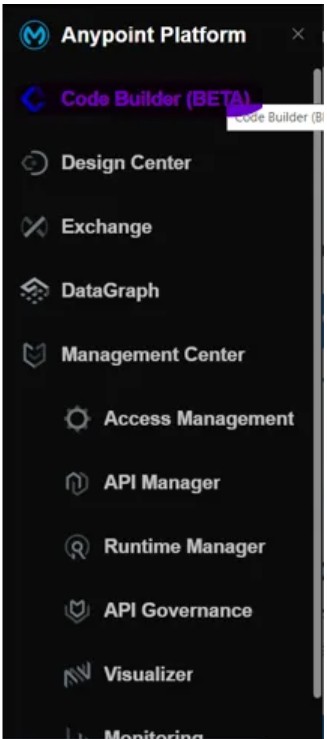
Start Anypoint Code Builder
Step 2:
- Create a New API Project.
- Click on File > New > Mule Project to create a new Mule project.
- Shows the "New Mule Project" wizard, where you enter the project name.
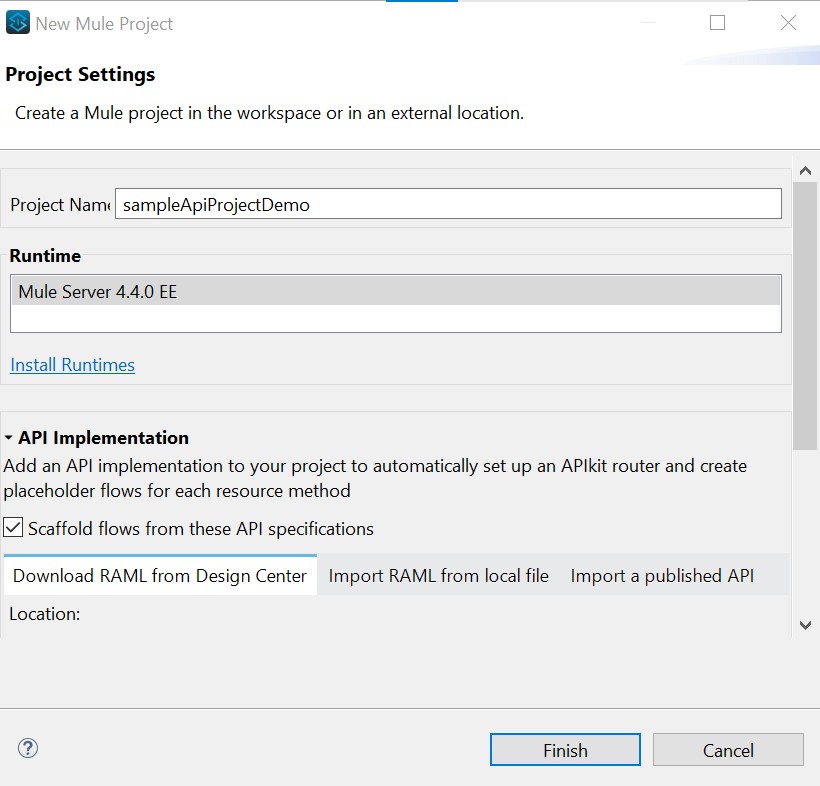
Step 3:
- RAML define in code editor.
- Show the RAML editor with example API definition (like /users endpoint)
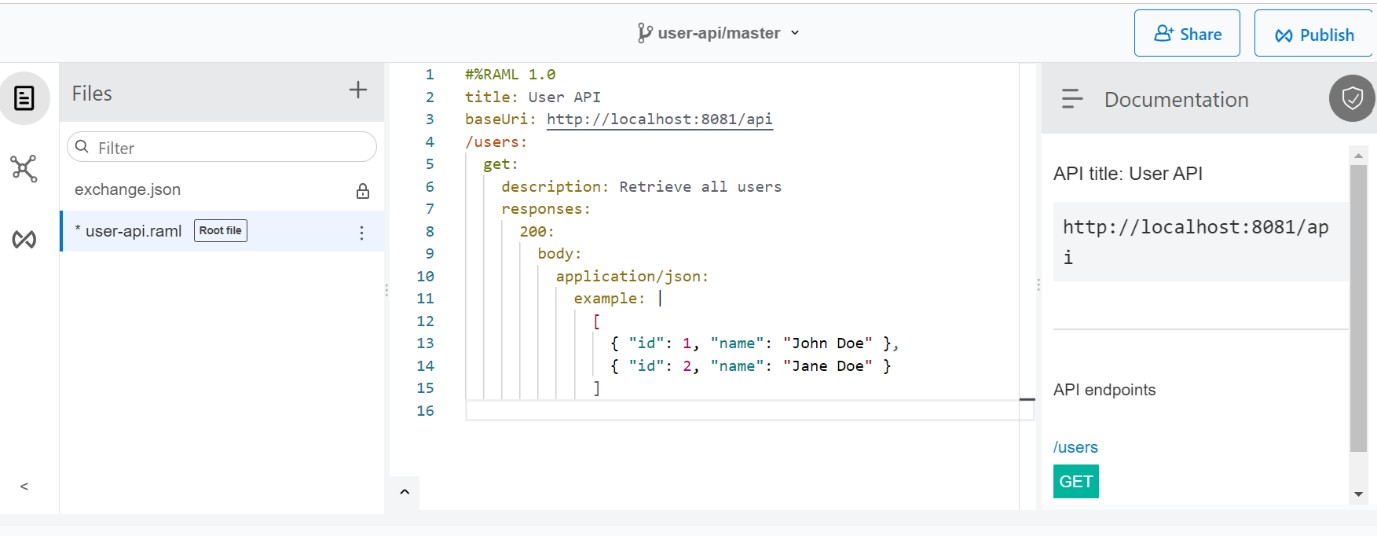
Step 4:
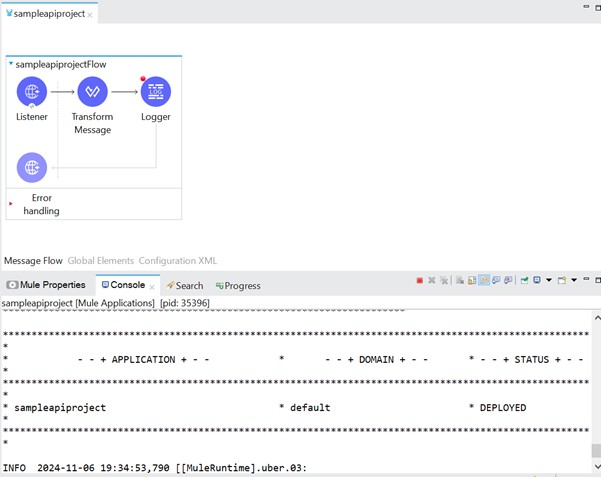
- Mule Flow with HTTP Listener.
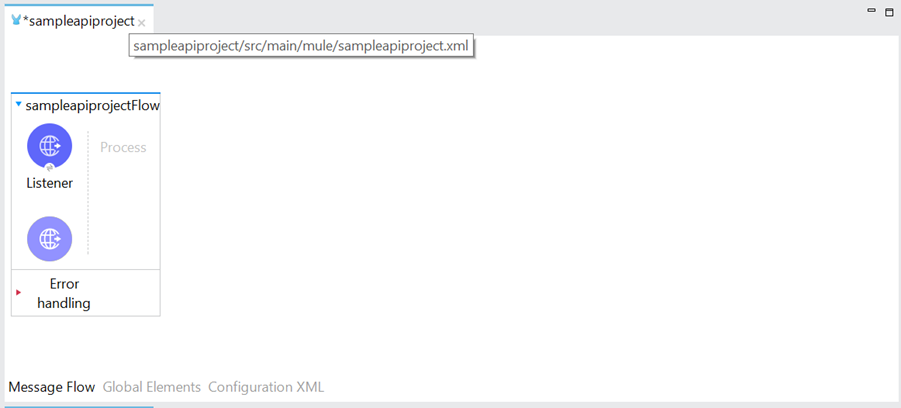
Step 5:
- Testing API in postman. Shows a test request to http://localhost:8081/api/users in Postman, with a successful response.
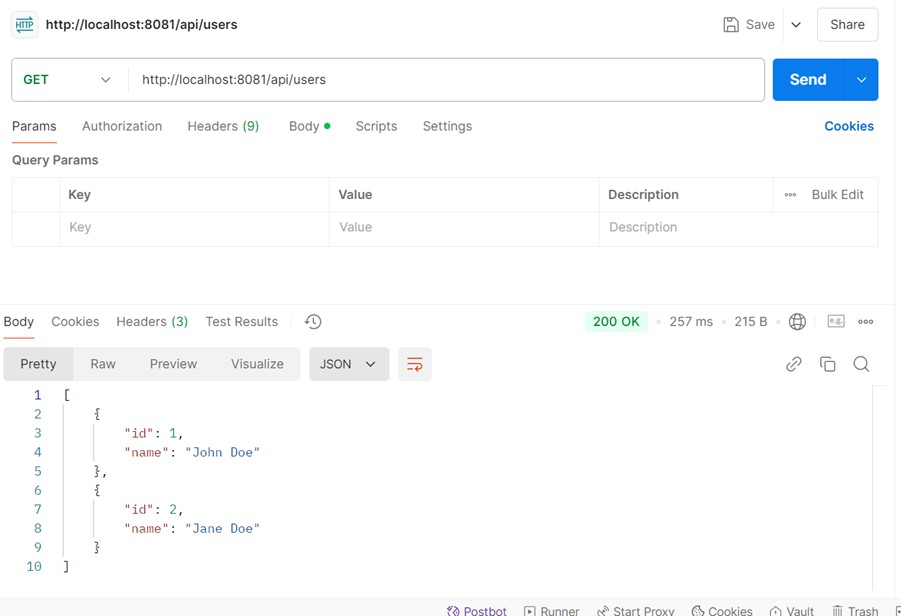
Step 6:
- Deploying API.
Want To Explore How Anypoint Builder Can Benefit Your Business?
Talk To Our Experts
What is the difference between Anypoint Code Builder and Anypoint Studio?
Both Anypoint Code Builder and Anypoint Studio are MuleSoft programming environments, however they target distinct users.
Anypoint Code Builder is an IDE (Integrated development environment) that runs in a browser and is cloud-based. It is flexible enough to enable developers to work from anywhere and interacts with Visual Studio Code, making it perfect for collaborative, real-time API and integration development. The platform also offers AI-powered tools like Einstein that utilize natural language to create code and workflows, increasing efficiency.
Anypoint Studio is a desktop-based IDE designed exclusively for MuleSoft’s Mule runtime. It offers a visual drag and drop editor to create APIs and integrations that can be used by technical and semi-technical people. Anypoint Studio allows offline development and offers a rich set of debugging tools, making it perfect for developers who like to work locally or want to customize their runtime options.
| Dimension | Anypoint Studio | Anypoint Code Builder | Accelirate’s Recommendation |
|---|---|---|---|
| IDE base | Eclipse-based desktop IDE | VS Code-based cloud and desktop IDE | Use Code Builder for modern MuleSoft development workflows |
| Setup style | Local installation | Browser-based or local VS Code extension | Choose Code Builder when teams need flexibility |
| Developer experience | Familiar for long-time MuleSoft developers | Familiar for developers used to VS Code | Use both during transition if the team is still moving from Studio |
| AI support | Limited compared to ACB | Built-in AI capabilities through MuleSoft Vibes | Use ACB for AI-assisted development |
| Collaboration | Works with source control but feels more traditional | Strong fit for Git-based workflows | Better for teams using DevOps practices |
| Best use case | Existing Mule projects, experienced Studio users | New projects, modern delivery teams, AI-assisted work | Start new strategic projects in Code Builder |
| Learning curve | Easier for existing MuleSoft Studio developers | Easier for VS Code users and modern developers | Train teams gradually instead of forcing a sudden switch |
ACB in practice: from setup-heavy to streamlined
How Anypoint Code Builder collapses the MuleSoft development lifecycle into a single, AI-ready environment.
The challenge
Anypoint Studio spread design, testing, deployment, and collaboration across multiple disconnected tools — slowing onboarding and creating friction for large teams.
The outcome
ACB unifies the entire lifecycle — design, build, test, deploy — in a single IDE-based environment, cloud or desktop, with native CloudHub support.
What makes ACB stand out
Native AI support
Einstein and MuleSoft Dev Agent generate flows from natural language prompts — no context switching required.
In-workspace testing
MUnit tests can be written and run immediately inside the workspace — no external test harnesses needed.
Native Git integration
Branch, commit, and push without ever leaving the IDE. Full SCM integration keeps teams in flow.
Enterprise readiness
Proxy support, Agentforce Topic Center, and SCM integration make ACB a robust platform for scalable, AI-ready delivery.
ACB's AI and enterprise readiness transforms MuleSoft delivery — from a fragmented, setup-heavy workflow to a cohesive, speed-optimised experience built for modern teams.
Accelirate MuleSoft Practice
What AI Capabilities Does Anypoint Code Builder Have and How Does MuleSoft Vibes Fit In?
Anypoint Code Builder is not just a modern IDE for MuleSoft development. It also brings AI support into the same environment where developers design APIs, build Mule applications, create flows, test integrations, and prepare deployments.
The main AI capability here comes through MuleSoft Vibes, MuleSoft's own AI assistant built directly into Anypoint Code Builder.
Anypoint Code Builder isn't just a new interface for old workflows — it's a deliberate architectural shift toward a development experience that reduces friction at every stage of the integration lifecycle. For organizations managing dozens of APIs and integrations at scale, that shift translates directly into delivery speed, reduced specialist dependency, and a platform that's ready for the AI-agent era already underway.Saujanya Verma Senior MuleSoft Developer
So, what does MuleSoft Vibes actually do?
It basically allows developers tell it what they want in normal English instead of having to build everything up from scratch by hand. From there, Vibes can aid with API specifications generation, Mule integration flows generation, asset search, application configuration, instance management and application security.
For example, instead of having to write out every API or integration flow from scratch, a developer may explain the business requirement in plain language and Vibes can assist establish a starting point. If you care about the mechanics of how the output is generated, it’s worth noting that MuleSoft also has its own optimized pipelines for generating API standard and integration flows.
Why does this matter for MuleSoft teams?
MuleSoft projects tend to involve a fair amount of repetitive work. Connector configuration, DataWeave transformations, API scaffolding, testing, deployment steps. It adds up. Having an AI assistant handle some of that groundwork can help developers move faster and focus on the parts that need their attention.
A few things to keep in mind though
MuleSoft Vibes is not a replacement for MuleSoft developers. Whatever it generates still needs to be reviewed, tested, checked for security issues, and properly governed before it goes anywhere near production. MuleSoft itself recommends reviewing generated output before using it in any business decisions, which is sensible advice.
At the end of the day, Anypoint Code Builder gives you the development environment and MuleSoft Vibes adds the AI layer inside it. Together they help teams build faster while keeping developers in control of what actually ships.
How does Anypoint Code Builder support low-code MuleSoft integration?
Anypoint Code Builder does make low-code MuleSoft integration more accessible, though it is worth understanding what that actually means in practice.
It gives developers a guided experience with visual flow design, prebuilt connectors, API scaffolding, reusable assets, templates, and DataWeave support. The idea is to reduce the amount of repetitive setup work so teams can focus on what actually matters, whether that is business logic, data quality, error handling, or performance.
In a typical workflow, a developer can start from an API specification, generate the basic project structure, connect systems using MuleSoft connectors, map data between applications, and test everything from the same environment. That kind of end-to-end flow in one place does save time compared to piecing things together across multiple tools.
This tends to be useful for enterprises connecting systems like Salesforce, ERP platforms, databases, customer portals, payment systems, and internal applications. Having reusable components and a consistent development environment helps teams move faster and keeps integration delivery more predictable across projects.
How does Accelirate use Anypoint Code Builder in enterprise MuleSoft deliveries?
At Accelirate, we use Anypoint Code Builder to make MuleSoft delivery faster, more structured, and easier to manage across enterprise projects. It gives our teams one environment to design APIs, build Mule flows, configure connectors, test integrations, and prepare deployments without constantly switching between tools.
For enterprise clients, speed is only part of the picture. What matters more is building integrations that are reusable, secure, scalable, and straightforward to maintain over time. Anypoint Code Builder helps with that by bringing development, testing, Git-based collaboration, and deployment workflows into a more connected experience.
In practice, we use it for:
- API design and Mule application development
- DataWeave transformation and connector configuration
- Reusable integration components
- Debugging, testing, and deployment preparation
- Git-based collaboration across development teams
- CI/CD-ready MuleSoft delivery practices
Where AI capabilities like MuleSoft Vibes are available, we also use them to move faster through early steps like project setup, API scaffolding, and flow generation. That said, every AI-assisted output goes through proper review, testing, and validation before it becomes part of any enterprise solution.
Best Practices and Tips
Now that you have got a fair understanding of the prerequisites for using Mulesoft Code Builder, let’s enhance the experience further with these best practices and pro tips. We're talking modular marvels, performance power-ups, and streamlined coding adventures. Check them out to level up your coding game!
01 - Modular Development
Break down your Mule applications into modular components and reusable flows for better maintainability and scalability. Leverage Code Builder to create modular templates that encapsulate common functionality, promoting code reuse.
02 - Performance Monitoring
Implement performance monitoring tools and techniques to identify and address potential bottlenecks in your Mule applications. Use Code Builder to easily integrate performance monitoring components and instrumentation into your flows.
03 - Dependency Management
Manage dependencies efficiently, keeping libraries and connectors up to date using Code Builder's features for dependency resolution. Regularly review and update dependencies to benefit from bug fixes, improvements, and new features.
04 - Environment Configuration
Utilize Code Builder to manage environment-specific configurations, making it easier to deploy applications across different environments. Follow best practices for secure and parameterized configuration management.
05 - Continuous Integration/Continuous Deployment (CI/CD)
Implement CI/CD pipelines to automate the testing and deployment of Mule applications. Integrate Code Builder with CI/CD tools to enable seamless automation and deployment processes.
06 - Code Reviews
Conduct regular code reviews within your team to ensure adherence to coding standards and best practices. Use Code Builder to facilitate code reviews with features like syntax highlighting and inline commenting.
07 - Performance Tuning
Regularly review and optimize your Mule applications for better performance. Leverage Code Builder to identify and address potential performance bottlenecks through code analysis and profiling.
08 - Global Error Handling
Implement a centralized error handling strategy using Code Builder, ensuring consistent error responses and logging across your applications.
Setting Up for Success

MuleSoft's Code Builder is a game-changer for MuleSoft development, enhancing the developer's experience with seamless integration in Visual Studio Code. With its powerful features, code templates, debugging, testing, and more, it simplifies Mule application development. By following best practices, setting up the environment, and creating your first Mule application, you can harness the full potential of Code Builder. Embrace this tool to streamline your development process and take your MuleSoft projects to new heights. Ready to streamline development and boost productivity? It is always a smooth sail under expert guidance. Industry experts like Accelirate can assist you in your MuleSoft projects and elevate your experience. Explore our comprehensive services and get in touch with us for more details.
FAQs
If you've worked with MuleSoft, you know how often you end up juggling multiple tools just to get one integration done. That's exactly what Anypoint Code Builder tries to fix.
It's MuleSoft's development environment built for APIs, integrations, and automations, and it feels a lot like working in Visual Studio Code, which most developers are already comfortable with. You can use it directly in the browser or install it as a VS Code extension, depending on what works best for you.
What makes it practical is that everything lives in one place, designing APIs, building Mule applications, writing DataWeave, testing flows, managing source control, and publishing assets. No constant tab switching, no context loss. For MuleSoft developers, it's basically a cleaner, more connected way to work.
Yes. Anypoint Code Builder supports low-code MuleSoft integration through visual flow design, prebuilt connectors, API scaffolding, reusable assets, and guided development tools. It helps teams build integrations faster without starting from scratch, while still giving developers control for complex enterprise use cases.
Not immediately for every team. Anypoint Studio is still used by many MuleSoft developers. But Anypoint Code Builder is MuleSoft’s newer development environment and is better aligned with VS Code, cloud development, Git workflows, and AI-assisted development.
Yes. It can be used locally through a Visual Studio Code extension or through the browser-based cloud IDE.
Yes. MuleSoft Vibes is available directly in Anypoint Code Builder and supports natural language-based development, deployment, management, and troubleshooting tasks.
MuleSoft Vibes works within the permissions of the logged-in Anypoint Platform user. It cannot perform actions that the user does not already have permission to perform.
It is mainly built for developers, but its guided development experience, templates, connectors, and AI assistance can make MuleSoft development easier for a wider group of technical users.